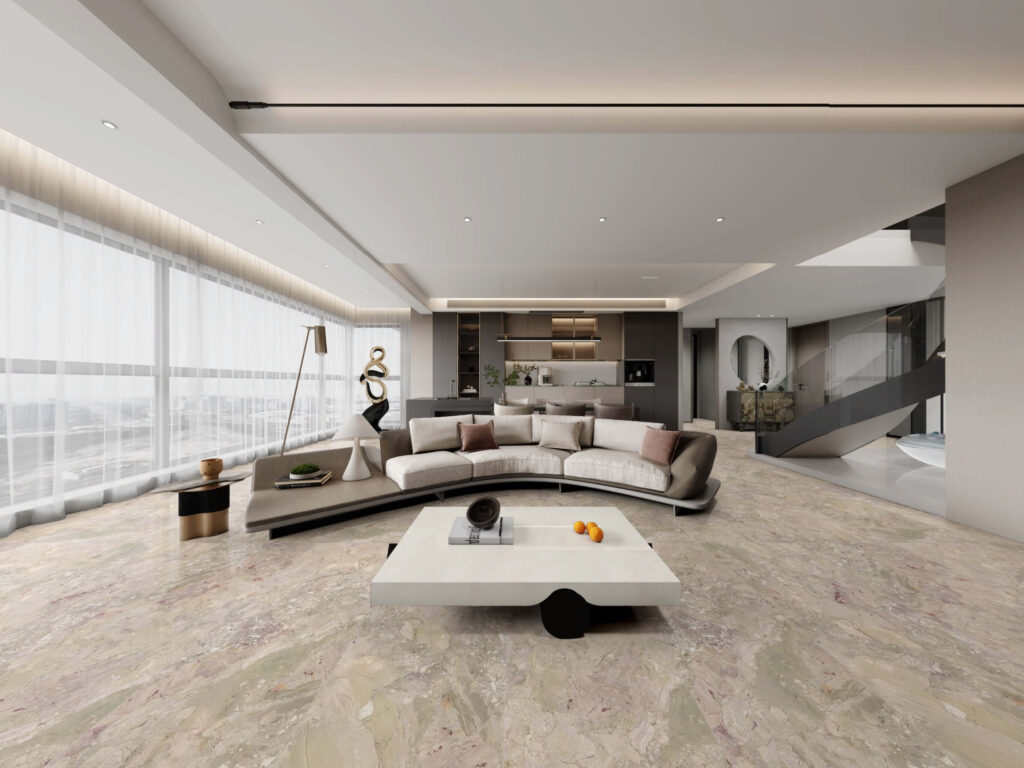
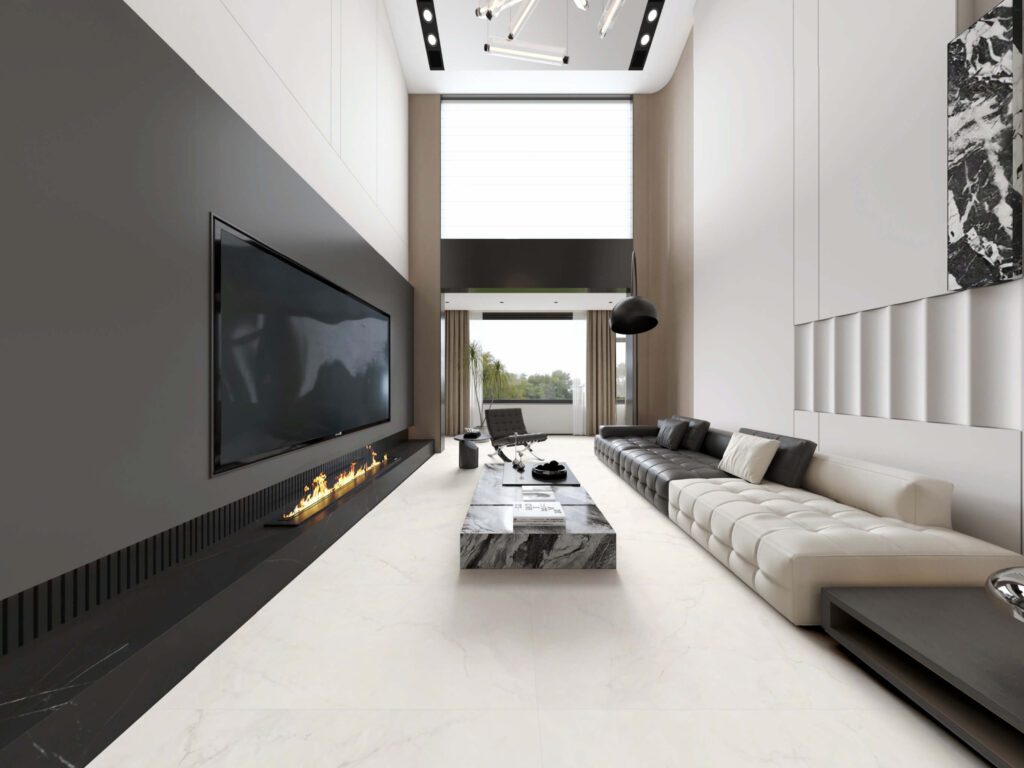
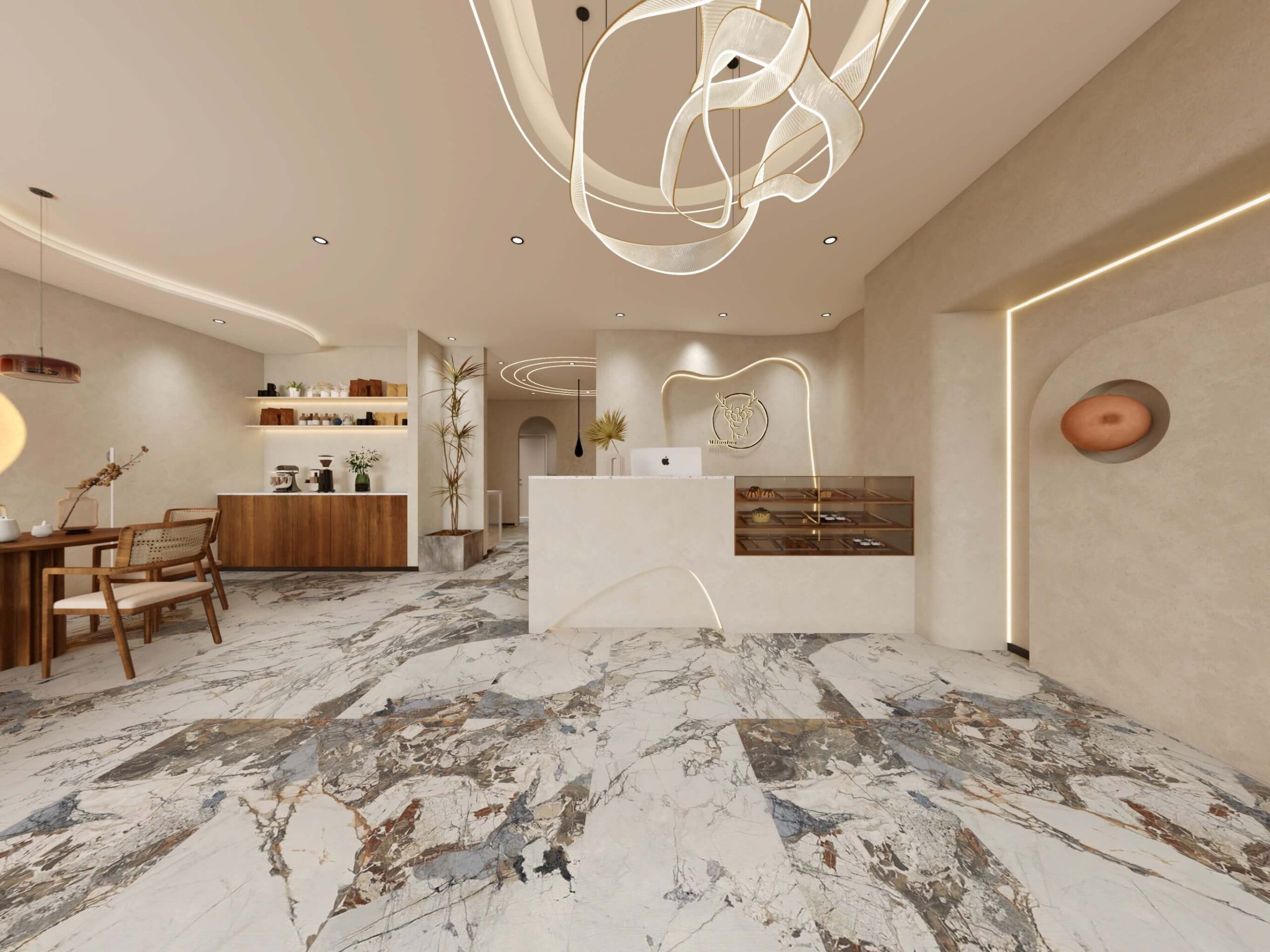
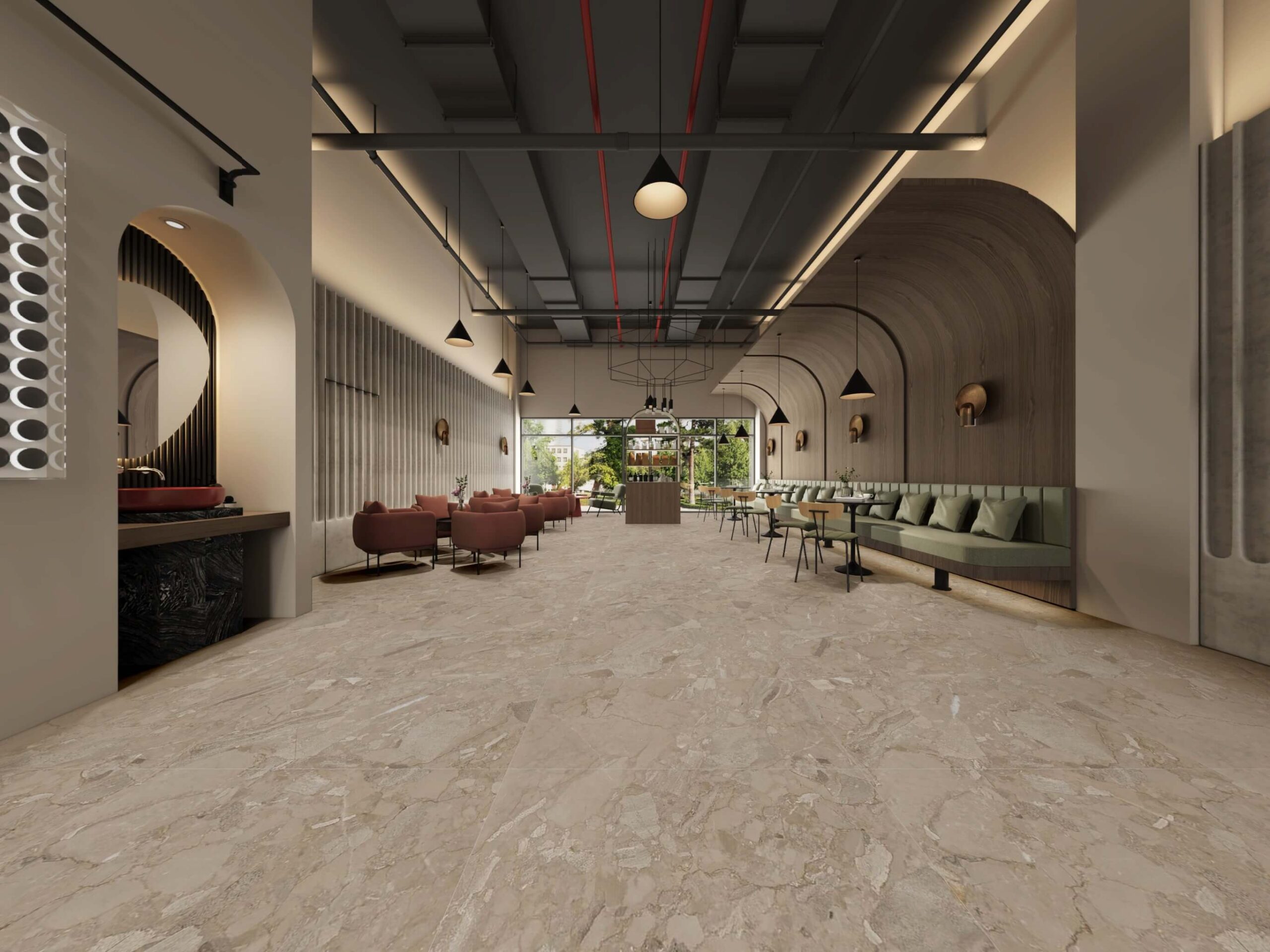
Porcelain Tile Manufacturer for Commercial &Project Supply
EN14411/ ISO13006 Compliant Glue Dry-Granule Tiles for AU. EU. UK Markets
Valensa Ceramics is an export-oriented porcelain tile manufacturer based in Foshan, China, supplying commercial wall and floor tile solutions for distributors and project teams across Australia, the European Union, and the United Kingdom.
With more than 20 years of continuous manufacturing experience, we focus on project suitability, standard compliance, and long-term supply stability. Our approach supports specification review, tender evaluation, and phased project delivery rather than one-off spot purchasing.
Why Choose Valensa as Your Glue Dry-GranuleTile Manufacturer ?
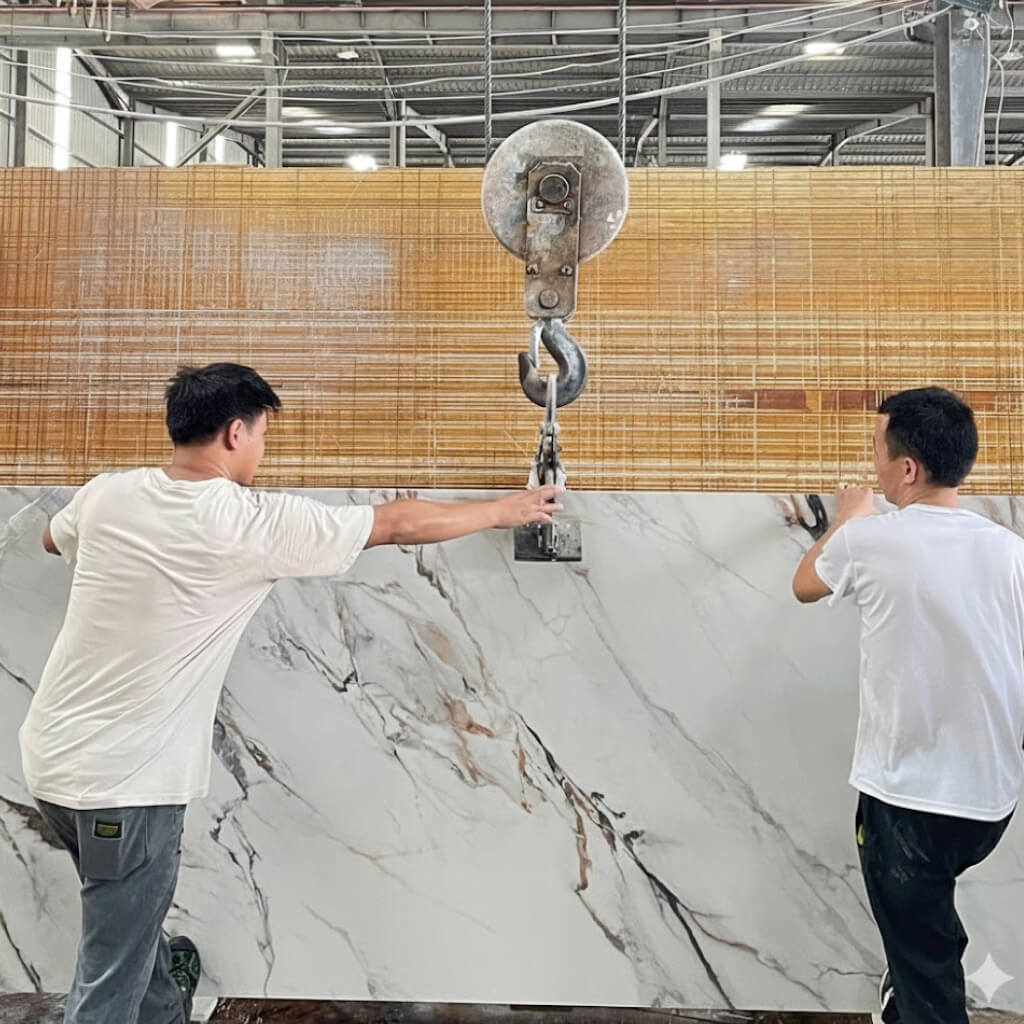
Foshan Manufacturing Facility
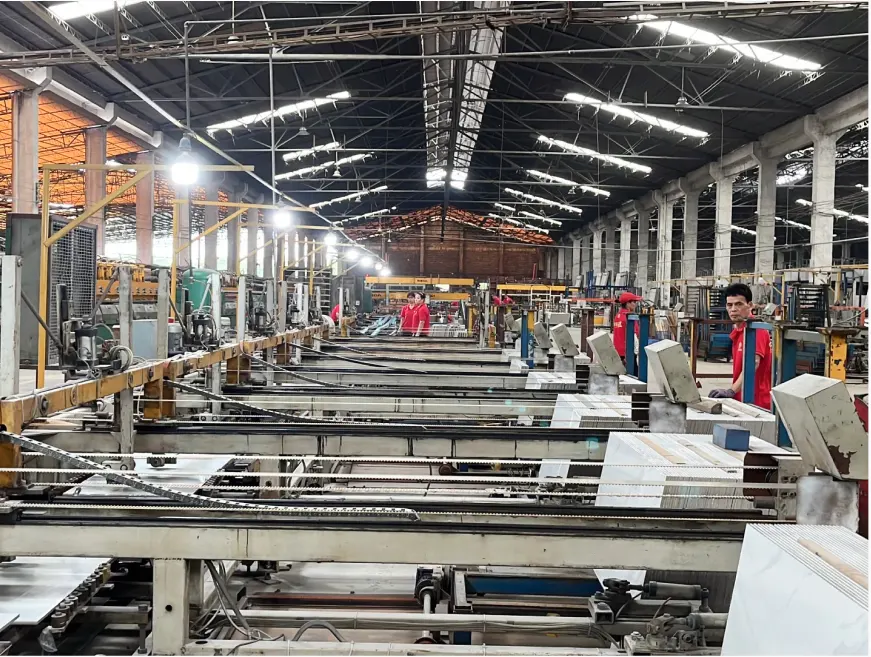
Valensa operates an integrated porcelain tile manufacturing facility in Foshan, China—one of the world’s most established ceramic production hubs.
Six automated production lines
Approximate daily production capacity of 90,000 m²
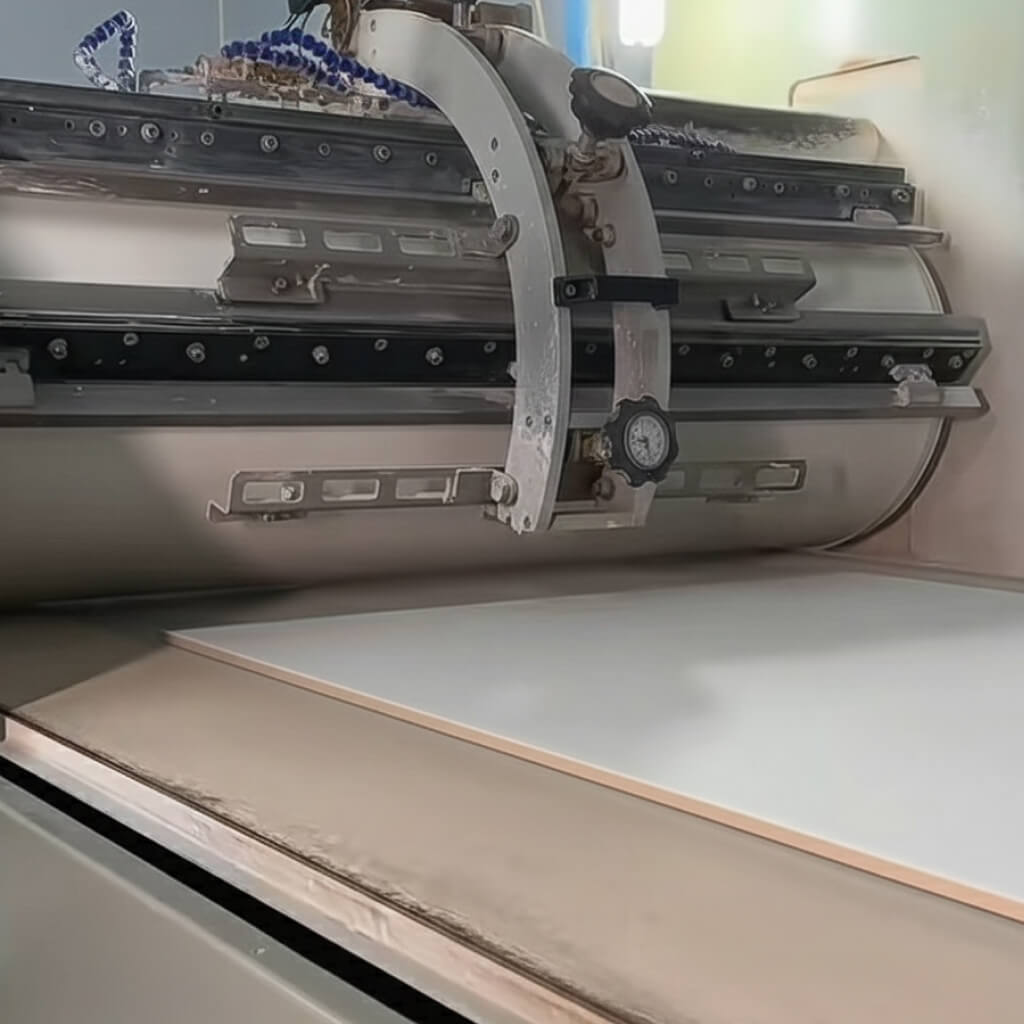
In-house processes covering forming,glazing, kiln firing, inspection, and
packing
This production scale enables reliable support for continuous replenishment, phased project supply, and batch-to-batch consistency, which are essential requirements for commercial and public-space projects.
Export Experience in AU / EU / UK Projects
Our products are exported to more than 40 countries, with long-term cooperation across Australia, Europe, and the United Kingdom. Typical applications include:
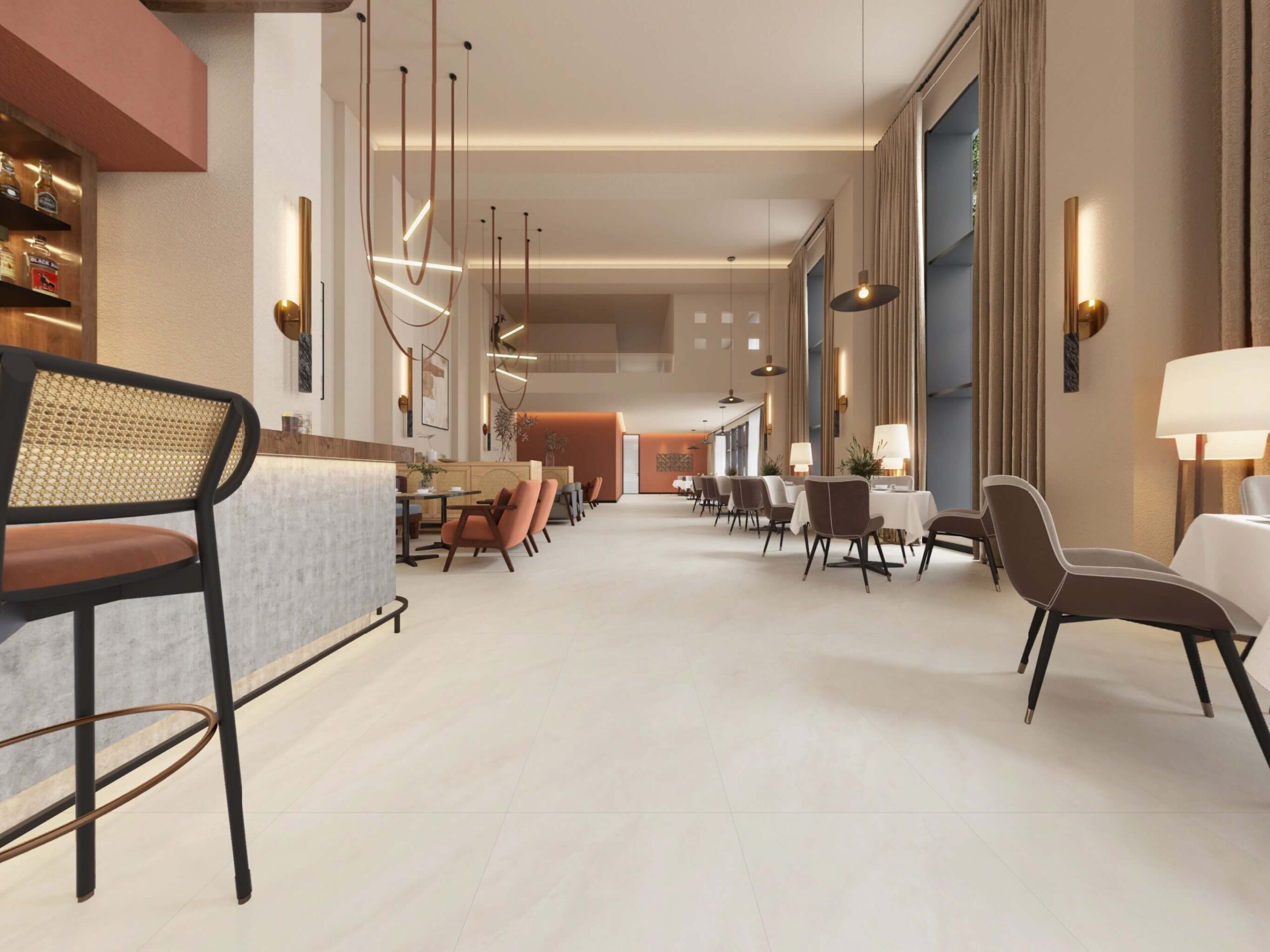
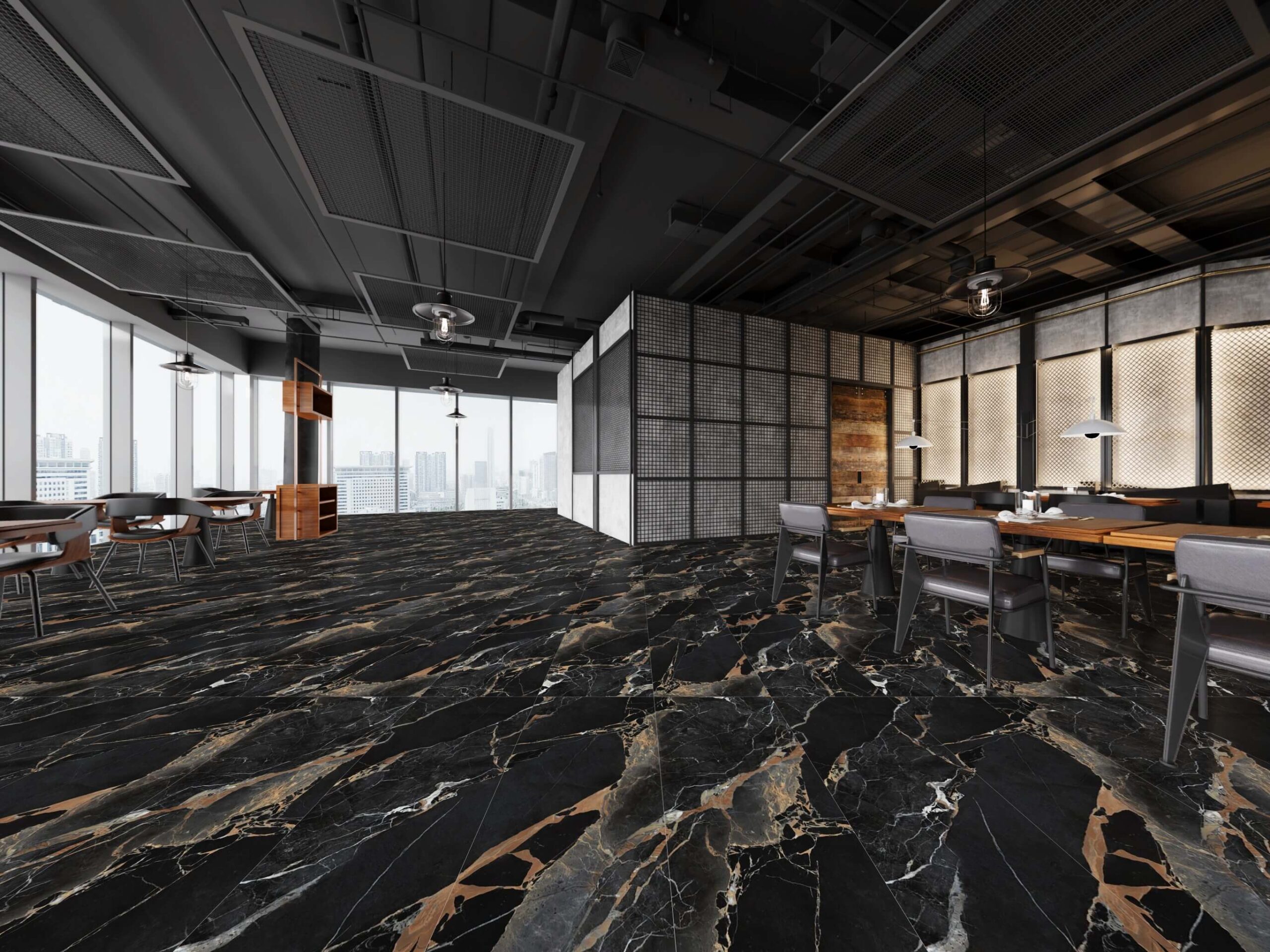
Hotel and hospitality interiors
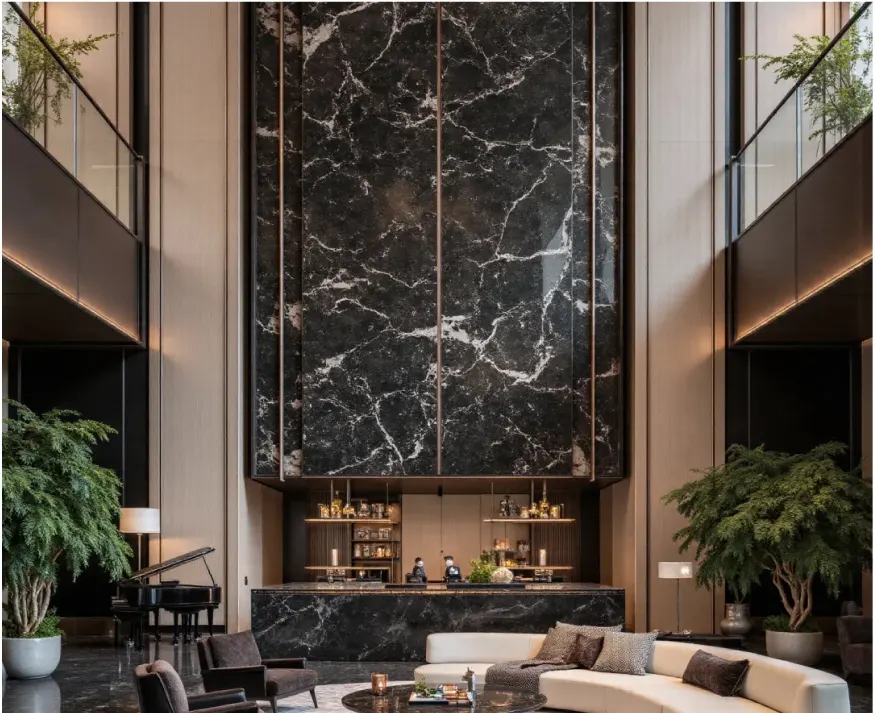
Commercial lobbies and office reception areas
Retail feature walls and public decorative spaces
Many distributors and engineering partners have worked with us for 10 to 20 years, primarily due to predictable technical performance, clear documentation, and stable delivery schedules.
Glue Dry-GranuleTiles for Commercial & Project Applications
Stable Texture · Anti-Slip Potential · Low-Gloss Stone Look
Glue dry-granule porcelain tile is an advanced ceramic slab surface developed for commercial and public spaces where long-term performance is more critical than initial visual impact.
Compared with conventional polished or soft-polished finishes, this surface prioritizes stability, safety, and consistent aging over time.
They are commonly specified for:
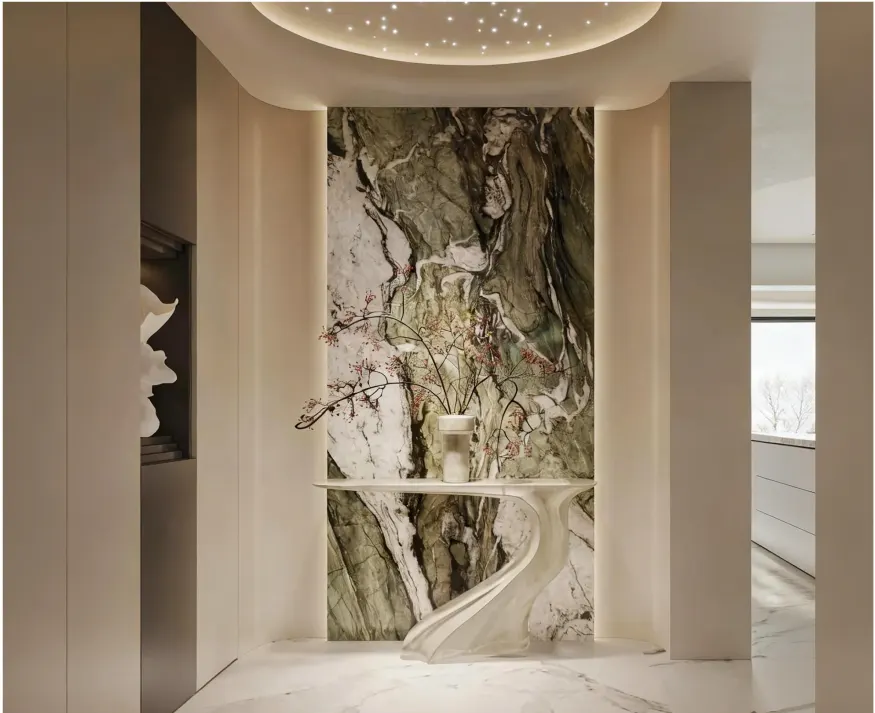
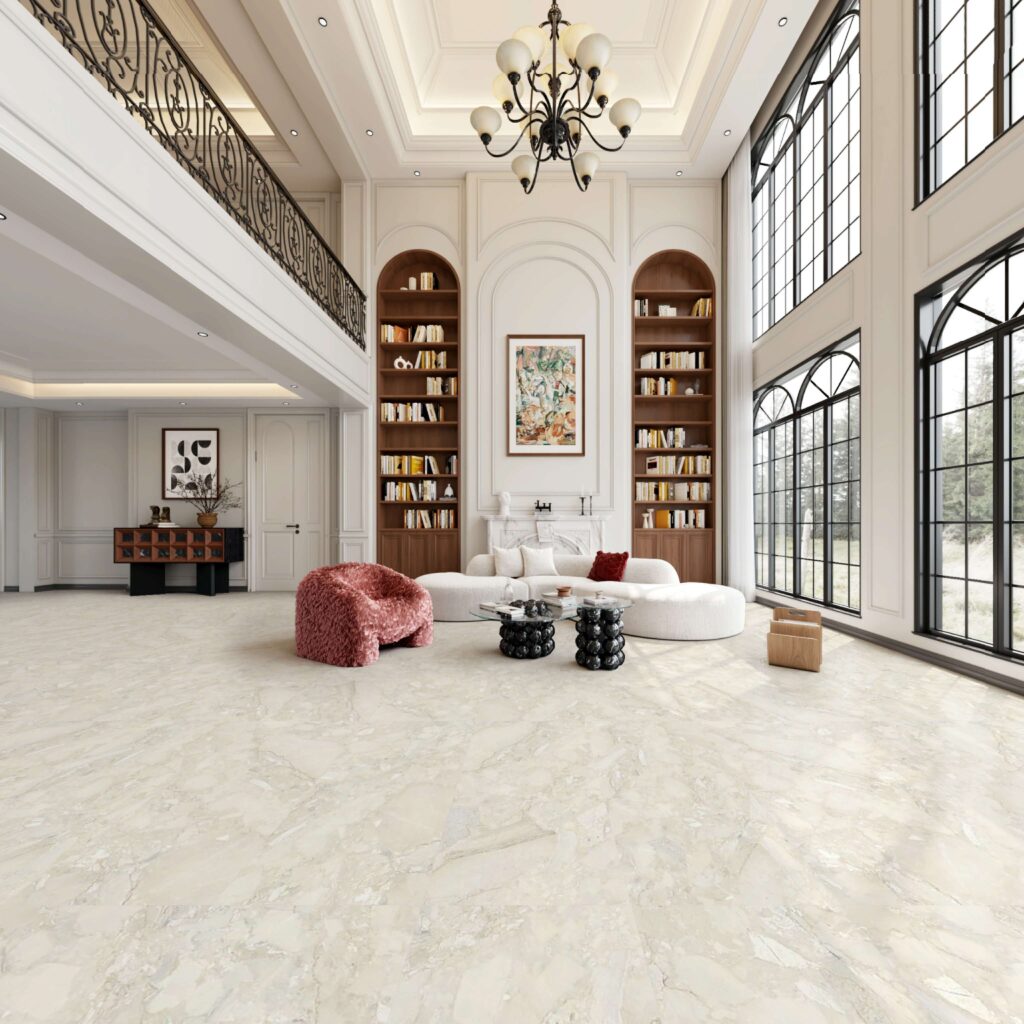
Hotel lobby feature walls
Retail brand statement areas
Large-format decorative panels in interiors
Wall & Floor Porcelain Tiles for Commercial Use
Our standard porcelain tile ranges are suitable for commercial wall and floor applications, offering stable color control, controlled dimensional tolerances, and consistency for large-area installations.
Large-Format & OEM Development Capability
Supported by in-house R&D, we provide large-format tiles and OEM or private-label development to meet distributor branding needs and project-specific design requirements.
What Is Glue Dry-Granule Tiles Technology?
Glue dry-granule is a digitally controlled composite surface process, consisting of:
Digitally positioned adhesive ink applied only where surface texture is required
Directional bonding of dry granules (mineral sand, frit, or sintered particles) to the pattern
High-temperature firing that permanently integrates the granules into the slab body
Final brushing or soft polishing to adjust gloss level and surface feel
Architectural Visual Effect
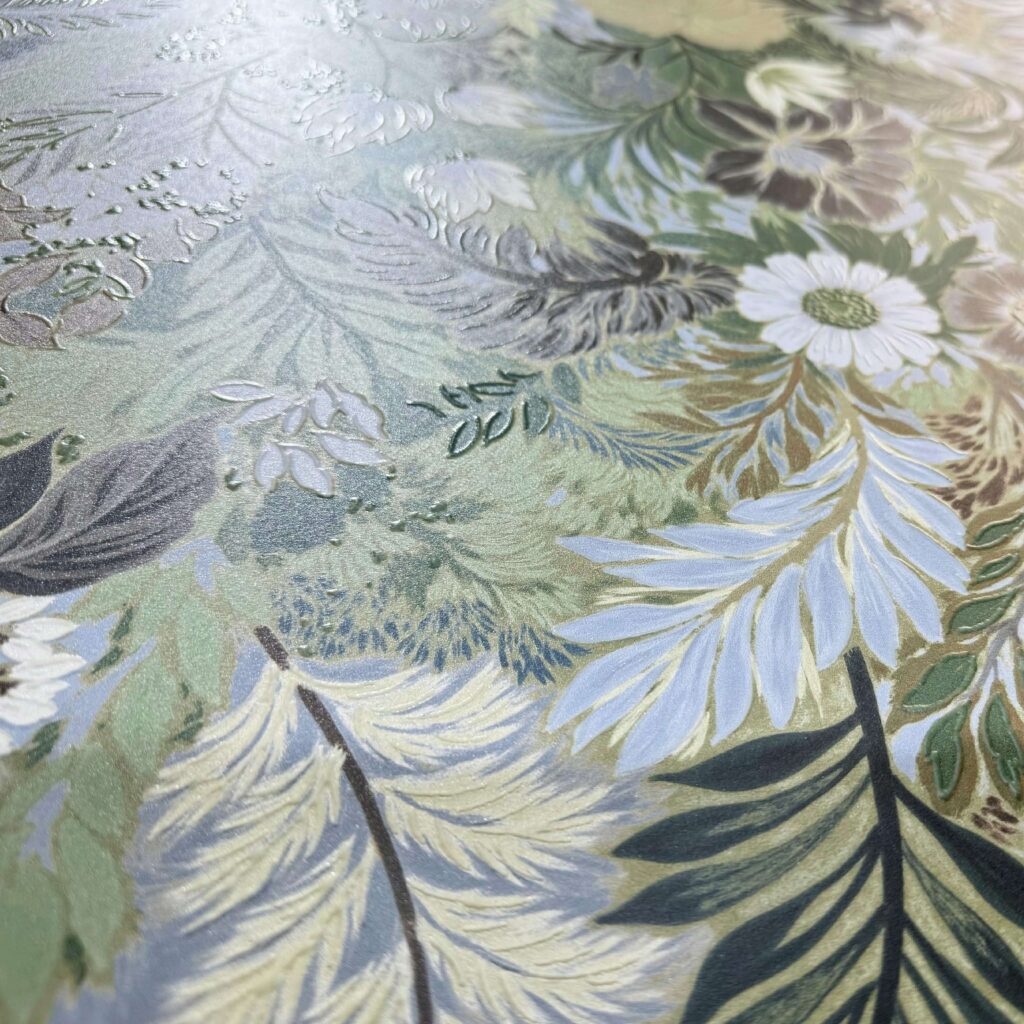
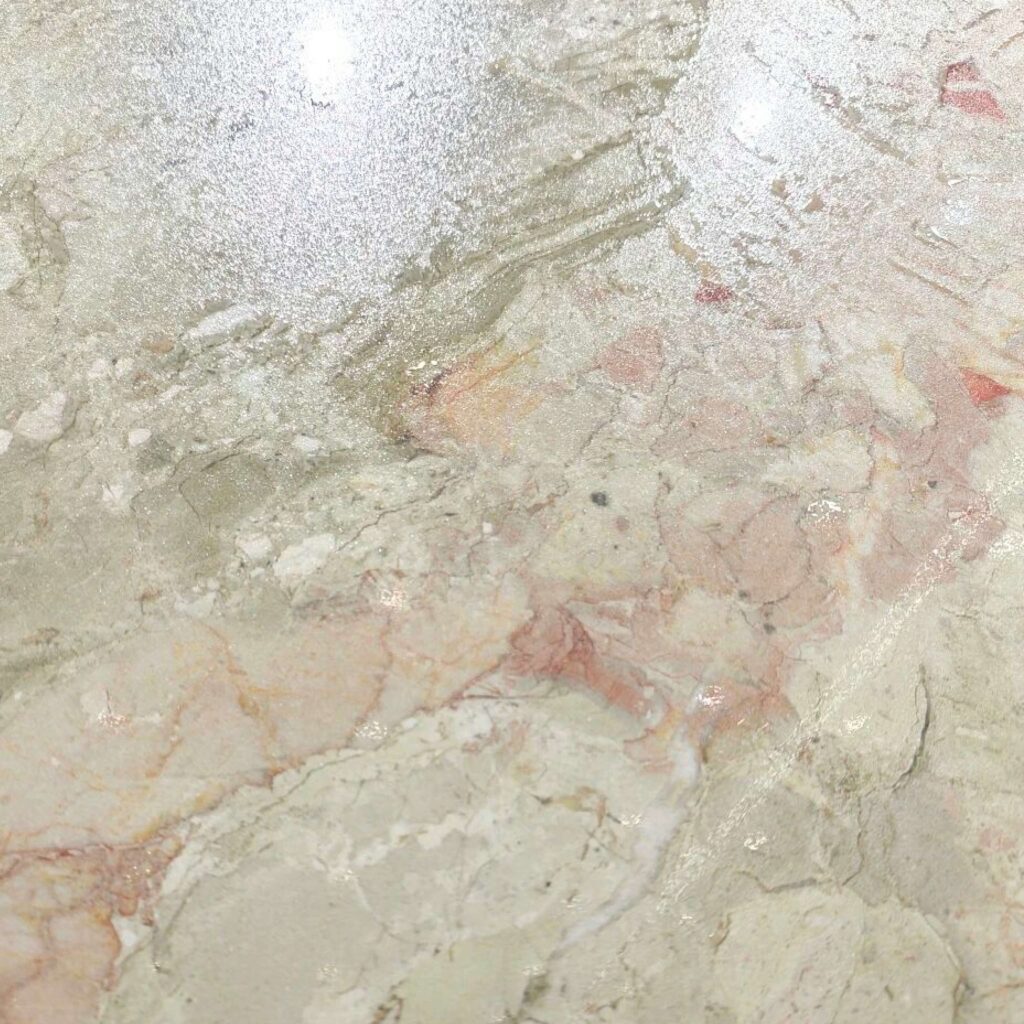
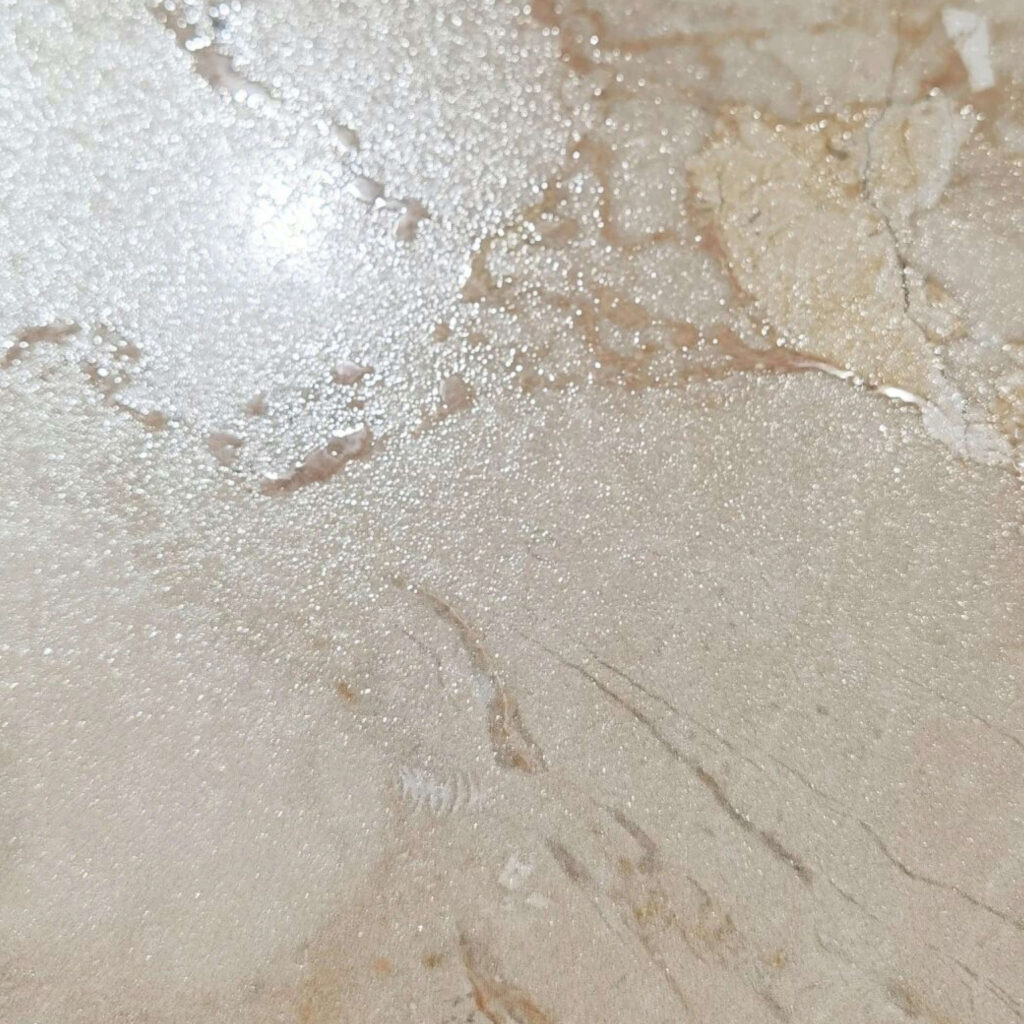
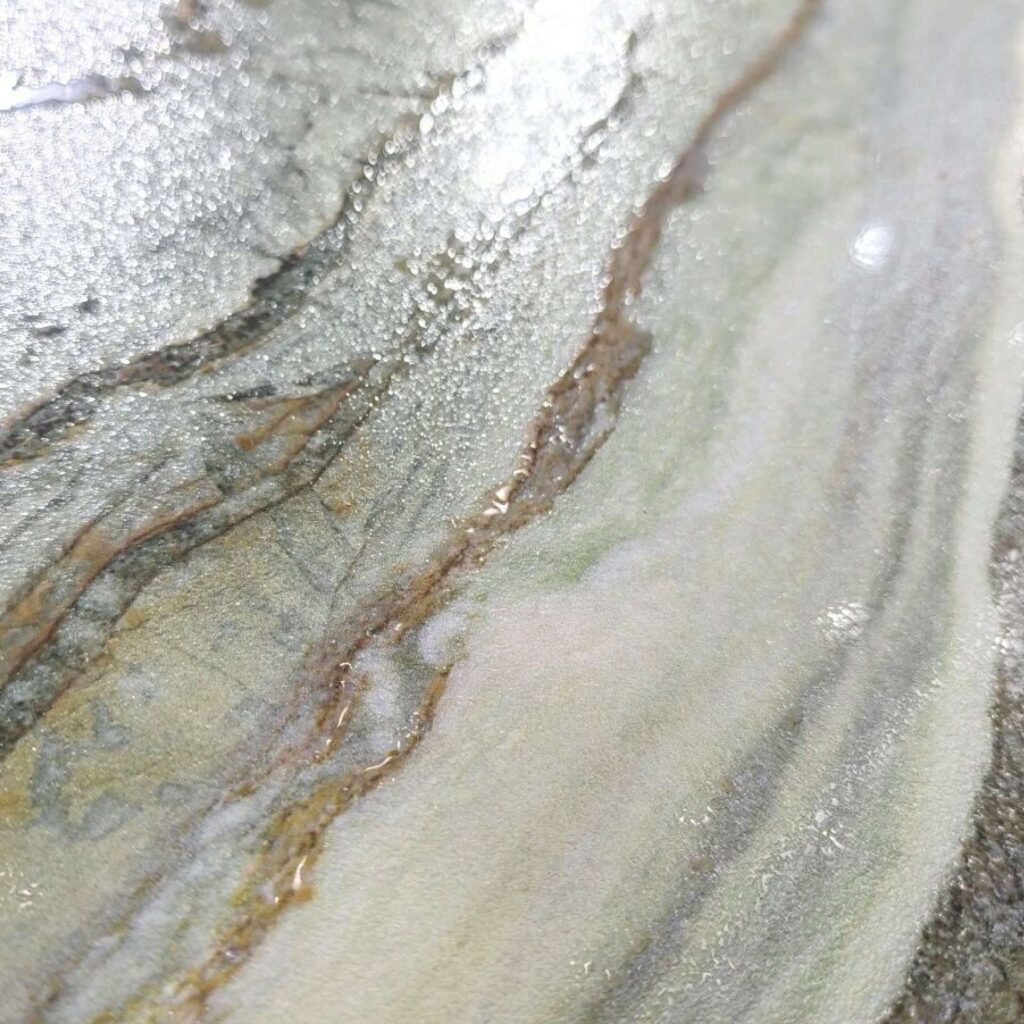
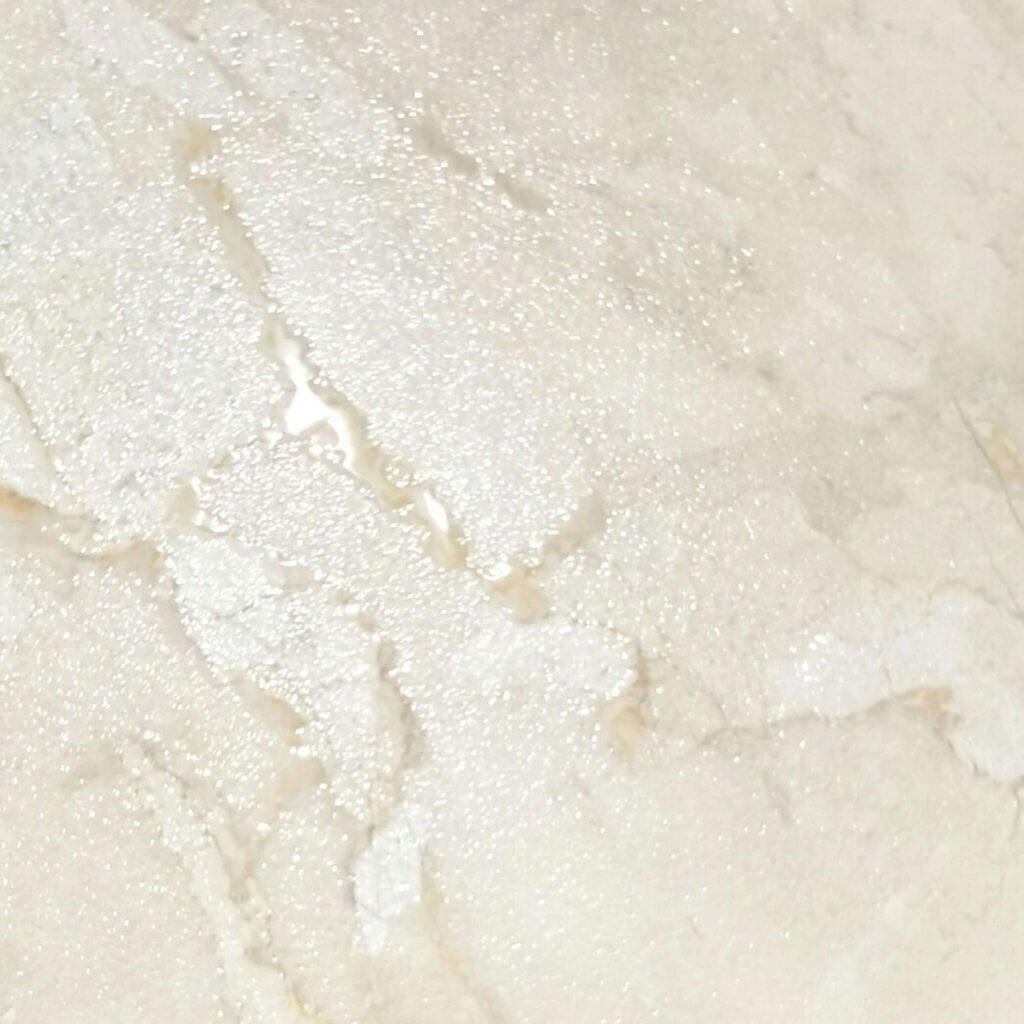
The result is a surface with real micro-relief texture that aligns with the stone pattern, rather than a flat printed appearance.
We go beyond crafting premium tiles with meticulous expertise, along with a diverse range of sizes — including 600×1200mm, 700×1500mm, 900x1800mm ( provide custom service ) — to precisely match the needs of every space.”
Glue Dry-granule Technical Key Benefits for Commercial Projects
1. Natural Stone Texture with Real Depth
Physical micro-relief allows the surface texture to remain visually clear under side lighting, making it suitable for lobbies, corridors, and large open areas.
2. Wear Resistance for Medium to High Traffic Areas
Dry-granule materials can achieve high hardness levels (Mohs 6–7 as a material reference).
Final wear performance should always be evaluated based on the finished product, particularly in large continuous commercial installations.
3. Anti-Slip Potential without Aggressive Roughnes
Fine micro-texture increases friction while remaining comfortable underfoot
Slip performance can be verified through market-specific testing, such as AS 4586 for Australia or DIN/EN test methods for EU markets.
4. Low-Gloss Visual Comfort
The surface features a low-reflection, non-mirror finish, helping to reduce glare and maintain a calm, consistent appearance over time in large spaces.
Typical Applications
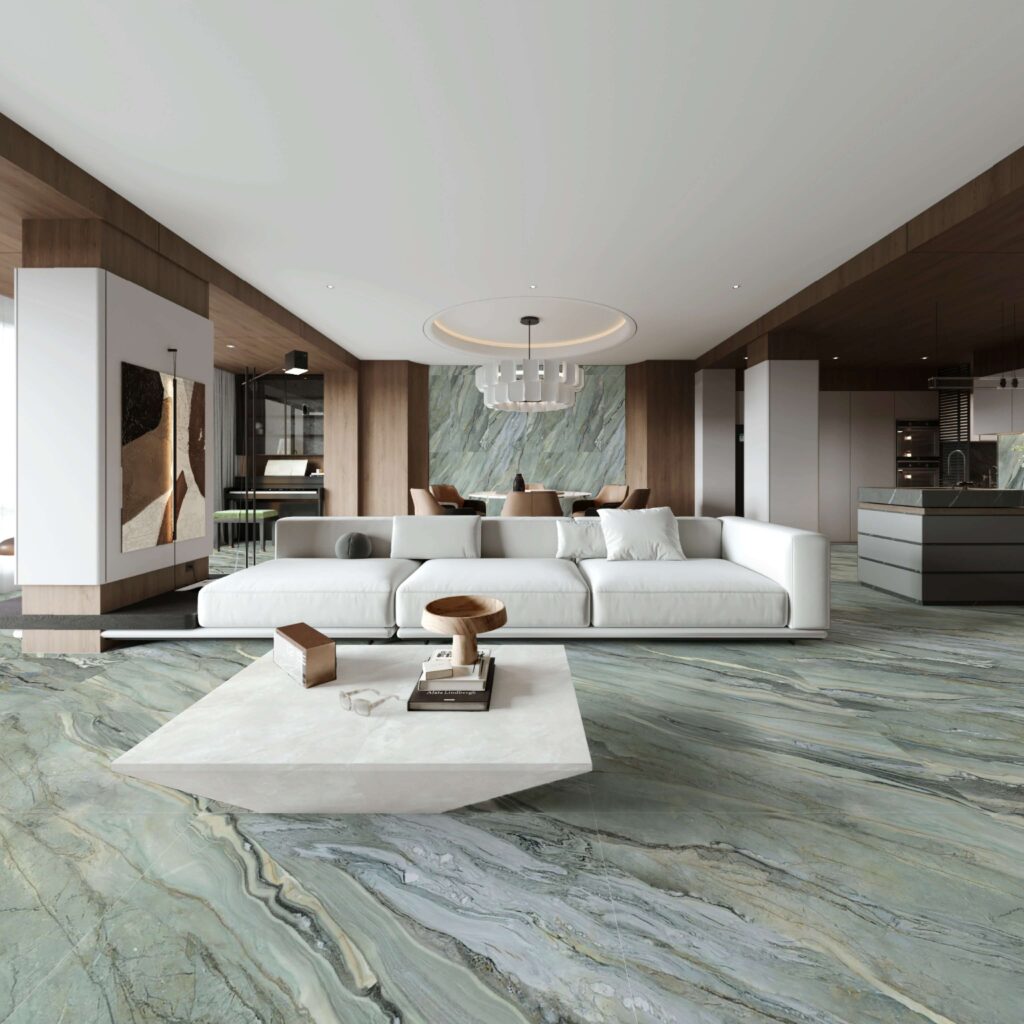
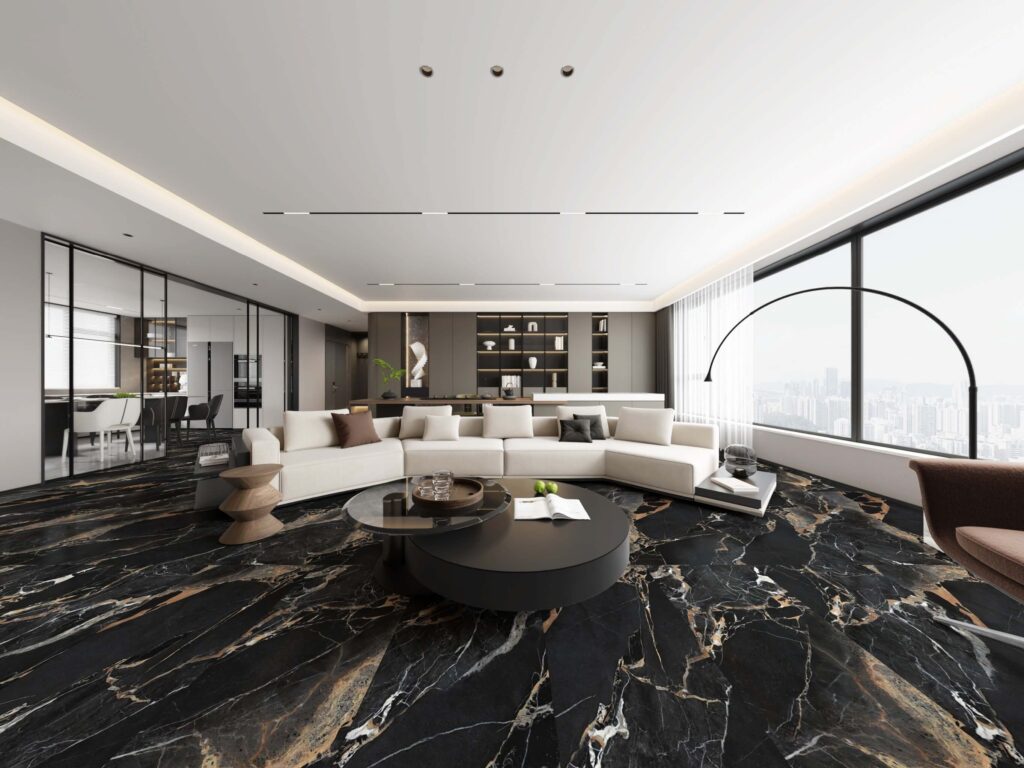
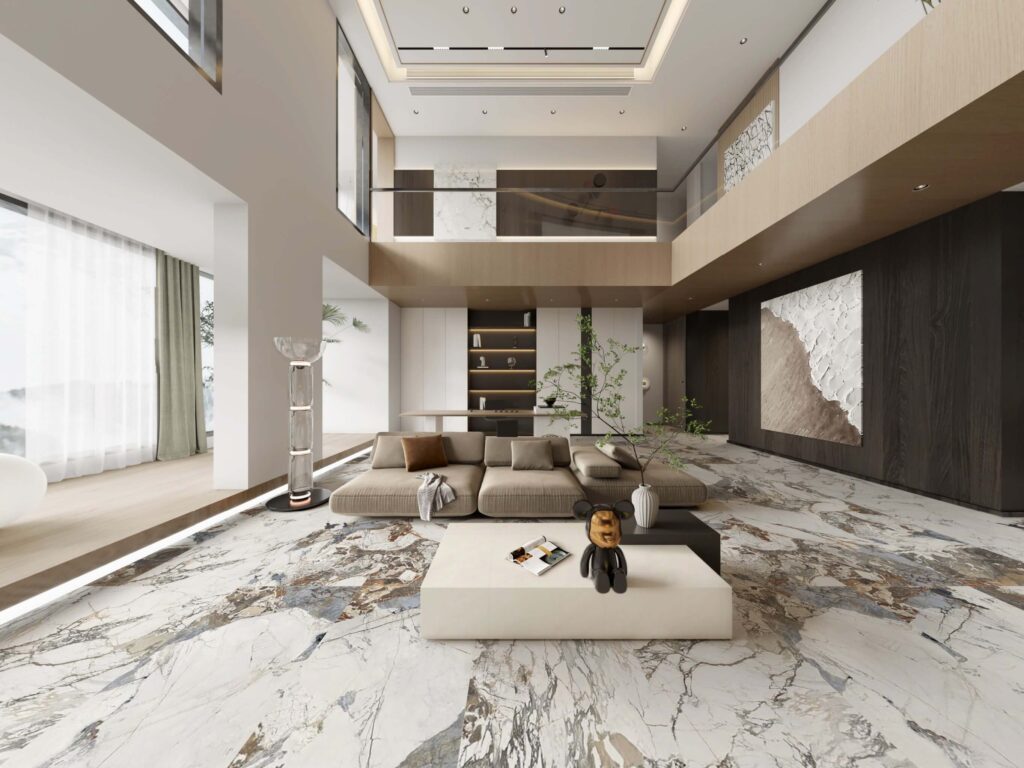
Glue dry-granule tiles, distinguished by their excellent anti-slip performance, high wear resistance, strong stain resistance, and three-dimensional surface texture, are widely used across a broad range of applications. They are suitable not only for residential spaces but also for various commercial and public areas.
In home interiors, they are particularly ideal for moisture- and stain-prone areas such as bathrooms, kitchens, and balconies, while also creating a refined aesthetic—such as matte or micro-cement–inspired finishes—for living rooms and bedrooms. In commercial settings, these tiles are commonly specified for restaurants, hotels and boutique accommodations, shopping malls, office buildings, hospitals, and schools—spaces with high foot traffic or stringent safety requirements.
In addition, their excellent weather resistance makes them suitable for outdoor areas such as courtyards and terraces, making glue dry-granule tiles a versatile ceramic material that combines both functional performance and decorative appeal.
Not recommended for: permanently wet areas, heavy-oil kitchen floors, or designs that require mirror-gloss reflection.
Maintenance & Cleaning
In terms of maintenance, glue dry-granule tiles are generally easy to clean and care for. Their dense surface structure prevents stains from penetrating easily, so everyday dust and light soiling can be removed with plain water or a mild neutral detergent. For tougher stains such as grease or limescale, they can be easily cleaned with specialized cleaning agents.
However, because the surface features fine granular textures, dust may accumulate in the grooves and uneven areas if not cleaned regularly. Periodic deep cleaning is therefore recommended to maintain both the appearance and the anti-slip performance.
Routine cleaning with neutral detergent and clean water
Avoid prolonged exposure to strong acids or alkalis
No sealing required under normal indoor conditions
Periodic deep cleaning recommended for commercial environments
Overall, glue dry-granule tiles are easier to maintain than natural stone and less prone to showing dirt than polished tiles, making them a low-maintenance ceramic tile option.
Standards & Project Support
Base standards: porcelain and sintered stone standards (e.g. EN 14411, where applicable),Available documentation:
Technical data sheets
Slip resistance and wear test reports (market-specific)
Project submission and internal approval materials
Glue Dry-granule Tiles Quality Control for Project Reliability
Full-Process Quality Management
Quality control is implemented throughout all production stages, including:
Incoming raw material inspection
In-process checks during forming,glazing, and firing
Final inspection prior to packing and shipment
This system ensures both visual consistency and technical stability across production batches.
Real-Time Kiln Monitoring
Kiln firing parameters are monitored in real time to maintain control of key indicators such as water absorption and dimensional tolerances.
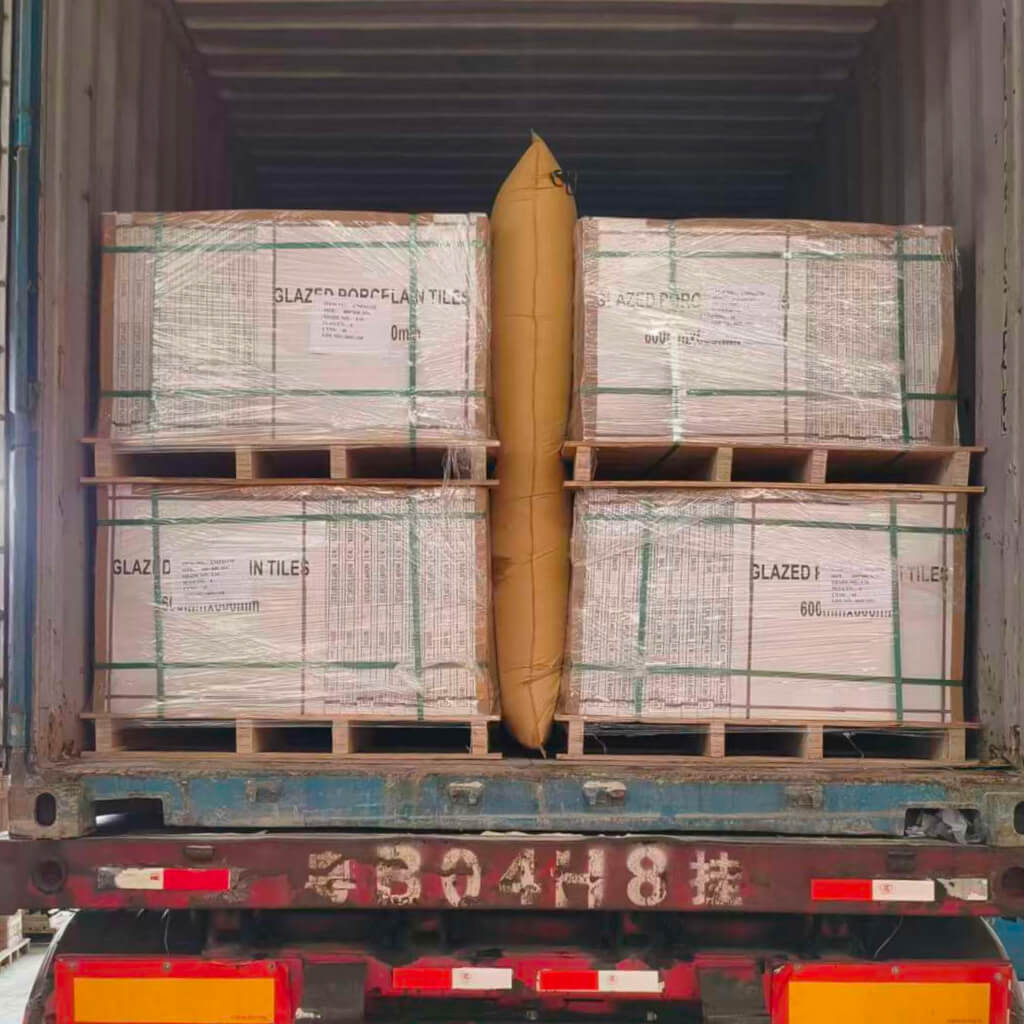
Professional-Grade Packing System:Engineering Every Layer of Protection for Flawless Delivery
We view packing as the final step of our production line and the first step of your delivery experience. For this reason, we have developed the "Porcelain, Treasured as Art" Packing System — a process exceeding industry standards. Through meticulous craftsmanship, we safeguard every inch of your tiles, ensuring they arrive at your project site in perfect condition.
Impact-Resistant Packaging
More Than Cushioning — It's Structural Protection
Modularized Packing
Scientific Organization for Efficient Receiving and Installation
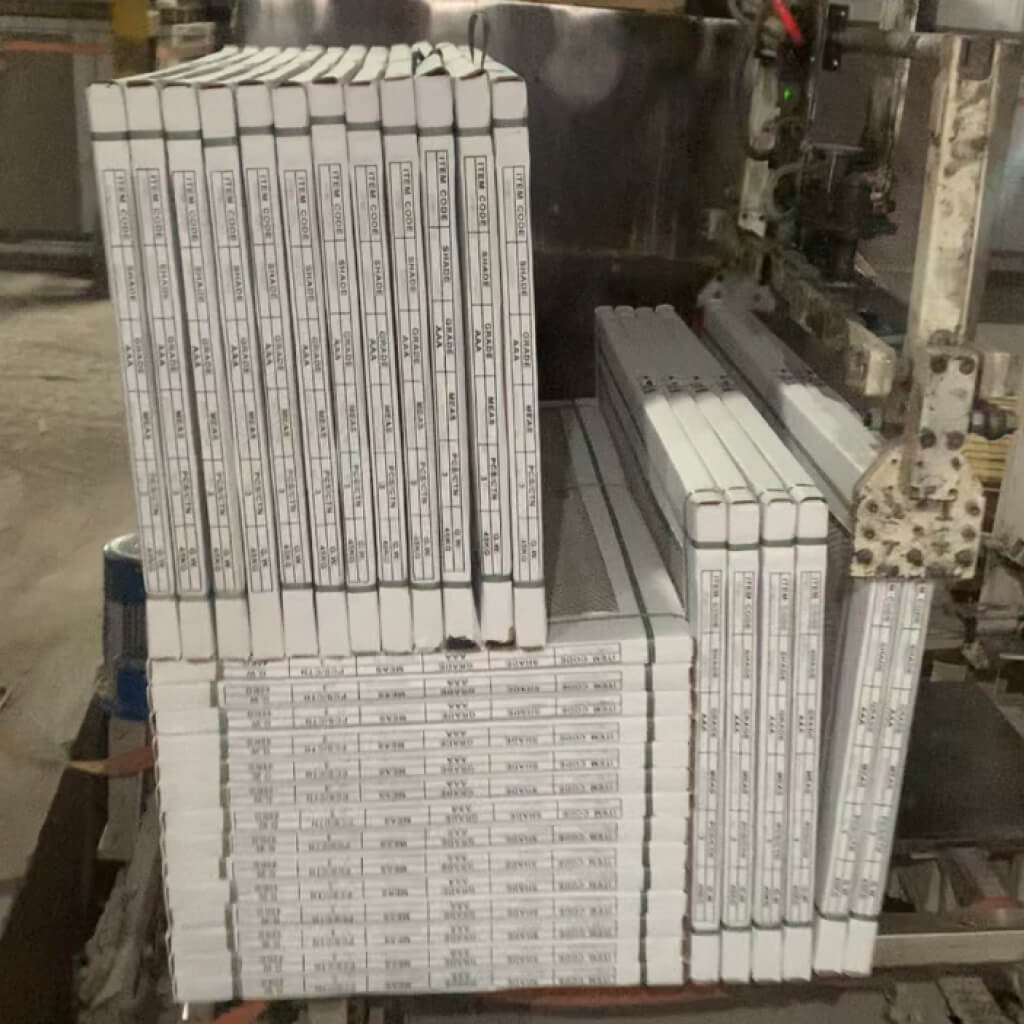
Clear Identification System
Instant Information, Full Traceability
The flawless condition you see upon unboxing is not a matter of luck -it is the guaranteed result of our systematic, multi-layered protection.
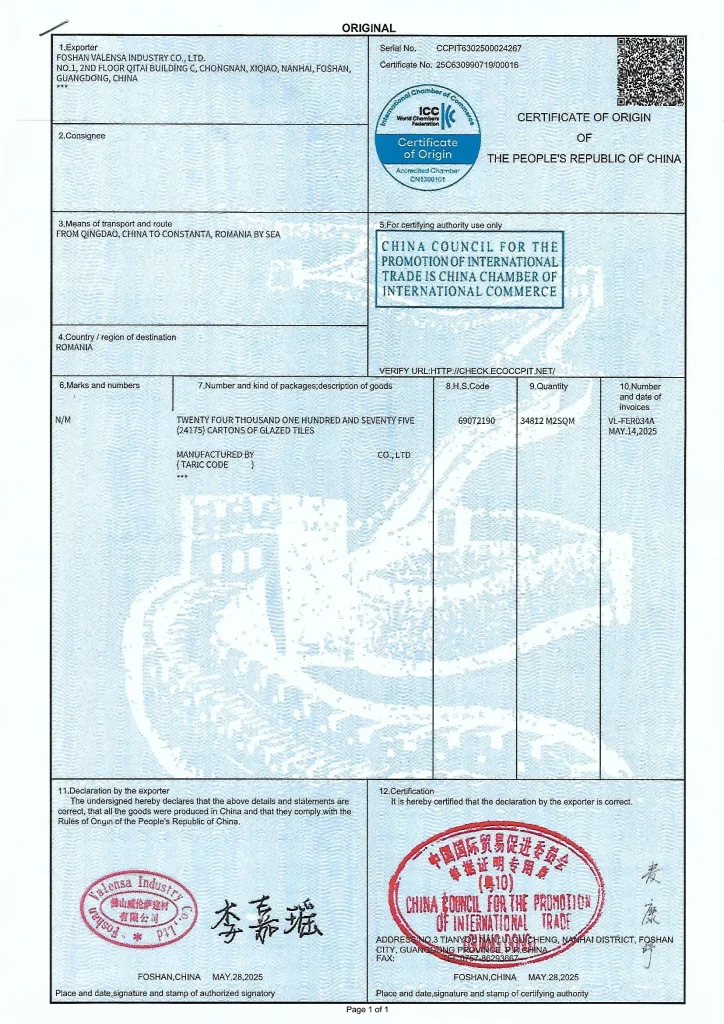
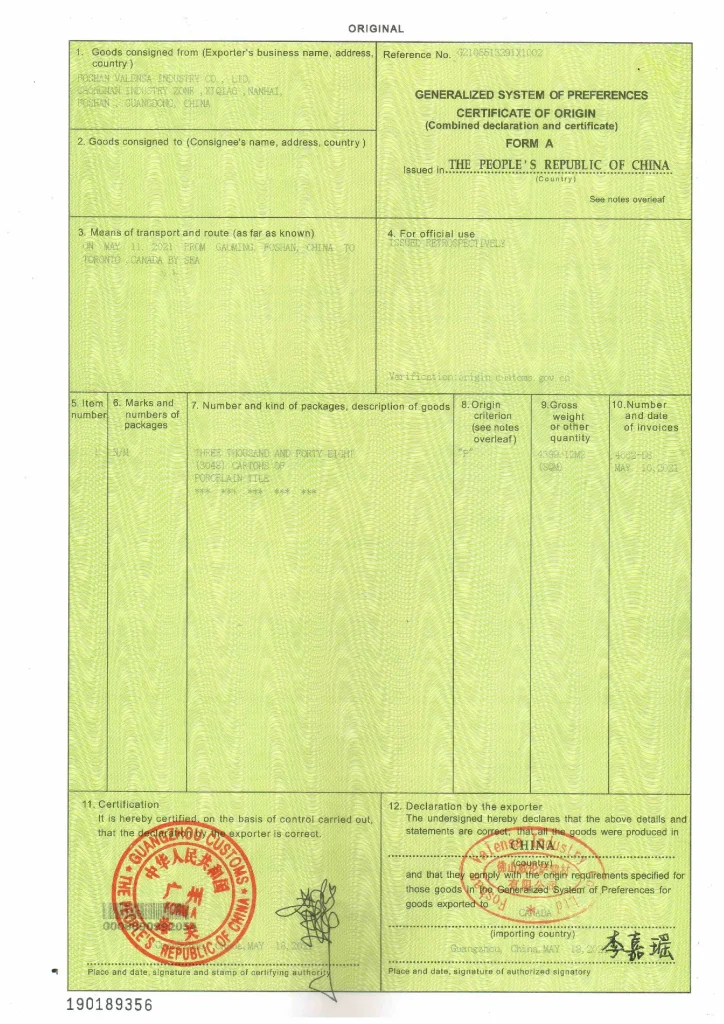
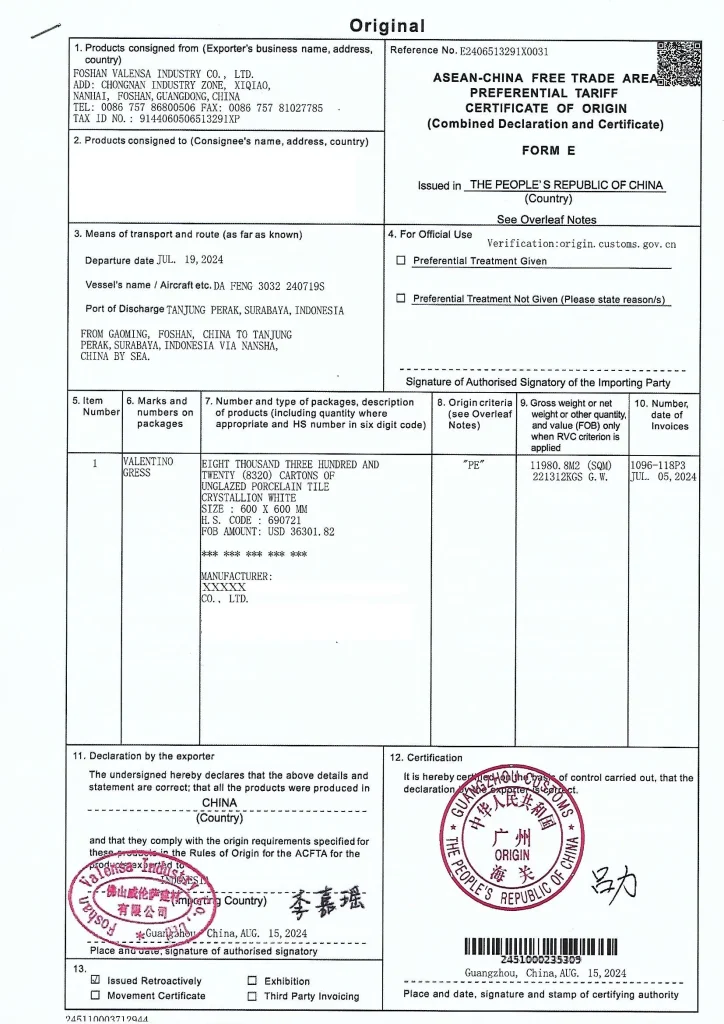
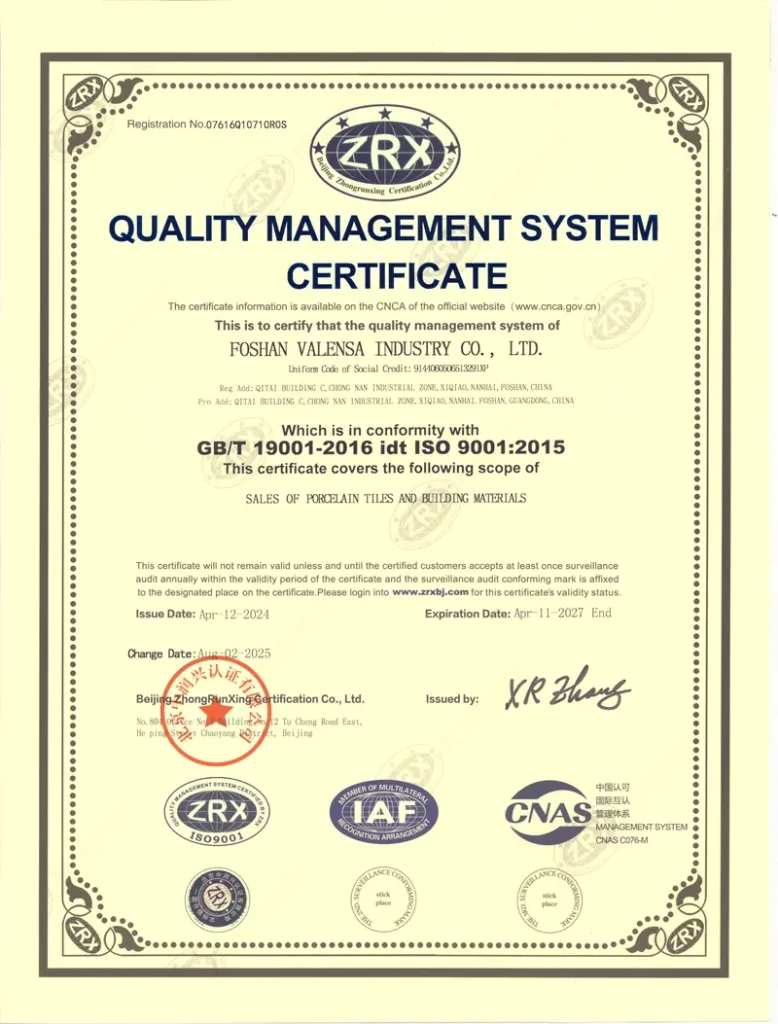
Our Certification & Documentation Support
Certifications
CO
FORM A
FORM E
FUMIGATION
ISO-R
Technical Documentation for AU / EU / UK Projects
For project and procurement use, we provide:
EN14411/ ISO13006-aligned technical datasheets
Available third-party test reports (for selected series)
Product samples for material assessment
Cooperation Models for Distributors & Project Teams
For Distributors
Minimum order quantity from one container
Stable supply programs for repeat orders
OEM and private-label support
For Project & Engineering Teams
Batch consistency for phased delivery
Technical documentation for specification and tender review
Installation guidance and warranty support
Before final approval, physical samples (dry and wet), testing requirements, and maintenance conditions should be carefully reviewed.
Contact us to request samples, technical data, or project-specific recommendations.
1. What do you actually mean by “porcelain tiles”?
People use the term porcelain tile very loosely.
For us, it means one simple thing first: water absorption of 0.5% or lower.
Why does this matter? Because in many projects we’ve seen, tiles looked good, passed basic checks, but later failed because they absorbed too much moisture over time.
Low absorption doesn’t solve every problem — but without it, problems are much more likely.
2. Are porcelain tiles suitable for outdoor use?
Yes — if the surface and system are right.
In our experience, outdoor problems usually happen when:
polished or smooth tiles are used outside
drainage isn’t clearly planned
slope is ignored
When those things are overlooked, the result is often complaints, safety concerns, or even replacement.
That’s why we usually recommend textured or matt surfaces for outdoor areas.
3. What about porcelain tiles in frost and cold climates?
People often ask if porcelain tiles are “frost-proof”.
From what we’ve seen, frost damage almost never starts with the tile itself. It starts with water trapped under or inside the system.
Low absorption helps, but proper drainage and installation matter just as much.
4. Are porcelain tiles better than ceramic tiles for commercial projects?
In most commercial situations — yes.
We’ve seen ceramic tiles used in public areas to save cost, only to be replaced a few years later due to:
moisture issues
edge damage
inconsistent appearance after wear
Porcelain tiles are simply more forgiving over time.
5. Can porcelain tiles be used for driveways?
They can — but this is where mistakes are expensive.
Most failures we’ve seen were not about the tile, but about:
base preparation
load assumptions
edge restraint
Approving the tile without confirming the whole system is risky.
6. Are porcelain tiles easy to maintain?
They can be — if expectations are realistic.
Textured outdoor tiles need periodic deep cleaning. Polished tiles need careful maintenance to keep their appearance.
Many complaints we hear are actually maintenance issues, not product defects.
7.Is Glue Dry-Granule Right for Your Project?
Glue dry-granule sintered stone is best suited for projects that require:
A natural stone appearance
Reduced surface glare
Long-term visual and performance stability
Controlled anti-slip characteristics
Porcelain Tile Manufacturer for Commercial &Project Supply
EN14411/ ISO13006 Compliant Crystalline Glaze Tiles for AU. EU. UK Markets
Valensa Ceramics is an export-oriented porcelain tile manufacturer based in Foshan, China, supplying commercial wall andfloor tile solutions for distributors and project teams across Australia,the European Union, and the United Kingdom.With more than 20 years of continuous manufacturing experience, we focus on project suitability, standard compliance, andlong-term supply stability.Our approach supports specification review, tender evaluation, and phased project deliveryrather than one-off spot purchasing.
Why Choose Valensa as Your Crystalline Glaze Tiles Manufacturer
Foshan Manufacturing Facility
Valensa operates an integrated porcelain tile manufacturing facility in Foshan, China-one of the world's most establishedceramic production hubs.
Six automated production lines
Approximate daily production capacityof 90,000 m2
In-house processes covering forming,glazing, kiln firing, inspection, and
packing
This production scale enables reliable support for continuous replenishment, phased project supply, and batch-to-batchconsistency, which are essential requirements for commercial and public-space projects.
Export Experience in AU / EU / UK Projects
Our products are exported to more than 40 countries, with long-term cooperation across Australia, Europe, and the UnitedKingdom. Typical applications include:
Hotel and hospitality interiors
Commercial lobbies and office reception areas
Retail feature walls and public decorative spaces
Many distributors and engineering partners have worked with us for 10 to20 years, primarily due to predictable technicalperformance, clear documentation, and stable delivery schedules.
Crystalline Glaze Tiles for Commercial & Project Applications
Crystalline Glaze Porcelain Tiles - Feature and Statement Surfaces
Valensa crystalline glaze porcelain tiles are developed for architectural feature walls and focal surfaces where visual depthand long-term material stability are both required.
They are commonly specified for:
Hotel lobby feature walls
Retail brand statement areas
Large-format decorative panels in interiors
Wall & Floor Porcelain Tiles for Commercial Use
Our standard porcelain tile ranges are suitable for commercial wall and floor applications, offering stable color control,controlled dimensional tolerances, and consistency for large-area installations.
Large-Format & OEM Development Capability
Supported by in-house R&D, we provide large-format tiles and OEM or private-label development to meet distributorbranding needs and project-specific design requirements.
Crystalline glaze tiles are produced through a controlled high-temperature kiln crystallization process, during whichcrystalline structures naturally form within the glaze layer during firing.
Unlike printed or surface-applied effects, the crystalline texture develops as part of the fring cycle itself. Each tile thereforedisplays natural visual variation,while core physical properties remain under controlled production parameters suitable forproject use.
Architectural Visual Effect
Under changing lighting conditions, the glaze surface reveals layered light and shadow effects. This characteristic makescrystalline glaze tiles particularly suitable for large-format feature applications in commercial interiors.
We go beyond crafting premium tiles with meticulous expertise, offering both positioned crystallization and full crystal-lization processes, along with a diverse range of sizes-including 600x1200x10mm, 700x1500x10mm, and1200x2700x9mm -to precisely match the needs of every space."
Compliance with International Ceramic Tile Standards
Valensa porcelain tiles are manufactured and tested in accordance with internationally recognized ceramic tile standards,
including:
EN14411
IS013006
Porcelain classification: Group Bla(low water absorption)
Relevant test reports can be provided to support specification,tender, and approval processes in AU, EU, and UK markets.
Key Technical Characteristics
Water absorption: s0.1% (tested in accordance with EN/ ISO methods)
Surface hardness: approximately Mohs 6
Wear and stain resistance suitable for commercial interior applicationsDimensional stability maintained through controlled kiln firing
Detailed technical datasheets and test reports are available for evaluation upon request.
Practical Advantages Compared with Natural Stone
When specified for commercial interiors, crystalline glaze porcelain tiles offer:
More consistent material structure
Reduced sensitivity to staining and chemical cleaning agents
Lower long-term maintenance requirements
Predictable performance across large installed areas
These characteristics make them a practical alternative to natural stone for projects seeking decorative impact combinedwith controlled lifecycle costs.
Crystalline Glaze Quality Control for Project Reliability
Full-Process Quality Management
Quality control is implemented throughout all production stages, including:
Incoming raw material inspection
In-process checks during forming,glazing, and firing
Final inspection prior to packing and shipment
This system ensures both visual consistency and technical stability across production batches.
Real-Time Kiln Monitoring
Kiln firing parameters are monitored in real time to maintain control of key indicators such as water absorption and dimensional tolerances. This approach balances natural crystalline variation with engineering predictability.
Professional-Grade Packing System:Engineering Every Layer of Protection for Flawless Delivery
We view packing as the final step of our production line and the first step of your delivery experience. For this reason, wehave developed the "Porcelain,Treasured as Art" Packing System -a process exceeding industry standards. Throughmeticulous craftsmanship, we safeguard every inch of your tiles, ensuring they arrive at your project site in perfect condition.
Impact-Resistant PackagingMore Than Cushioning -It's
Structural Protection
Modularized Packing Scientific Organization for Efficient Receiving and Installation
Clear Identification System Instant Information, Full Traceability
The flawless condition you see upon unboxing is not a matter of luck -it is the guaranteed result of our systematic, multi-layered protection.
Certification & Documentation Support
Certifications
CO
FORM A
FORM E
FUMIGATION
ISO-R
Technical Documentation for AU / EU / UK Projects
For project and procurement use, we provide:
EN14411/ ISO13006-aligned technical datasheets
Available third-party test reports (for selected series)
Product samples for material assessment
Cooperation Models for Distributors & Project Teams
For Distributors
Minimum order quantity from one container
Stable supply programs for repeat orders
OEM and private-label support
For Project & Engineering Teams
Batch consistency for phased delivery
Technical documentation for specification and tender review
Installation guidance and warranty support
FAQ
1. What do you actually mean by “porcelain tiles”?
People use the term porcelain tile very loosely.
For us, it means one simple thing first: water absorption of 0.5% or lower.
Why does this matter? Because in many projects we’ve seen, tiles looked good, passed basic checks, but later failed because they absorbed too much moisture over time.
Low absorption doesn’t solve every problem — but without it, problems are much more likely.
2. Are porcelain tiles suitable for outdoor use?
Yes — if the surface and system are right.
In our experience, outdoor problems usually happen when:
polished or smooth tiles are used outside
drainage isn’t clearly planned
slope is ignored
When those things are overlooked, the result is often complaints, safety concerns, or even replacement.
That’s why we usually recommend textured or matt surfaces for outdoor areas.
3. What about porcelain tiles in frost and cold climates?
People often ask if porcelain tiles are “frost-proof”.
From what we’ve seen, frost damage almost never starts with the tile itself. It starts with water trapped under or inside the system.
Low absorption helps, but proper drainage and installation matter just as much.
4. Are porcelain tiles better than ceramic tiles for commercial projects?
In most commercial situations — yes.
We’ve seen ceramic tiles used in public areas to save cost, only to be replaced a few years later due to:
moisture issues
edge damage
inconsistent appearance after wear
Porcelain tiles are simply more forgiving over time.
5. Can porcelain tiles be used for driveways?
They can — but this is where mistakes are expensive.
Most failures we’ve seen were not about the tile, but about:
base preparation
load assumptions
edge restraint
Approving the tile without confirming the whole system is risky.
6. Are porcelain tiles easy to maintain?
They can be — if expectations are realistic.
Textured outdoor tiles need periodic deep cleaning. Polished tiles need careful maintenance to keep their appearance.
Many complaints we hear are actually maintenance issues, not product defects.